
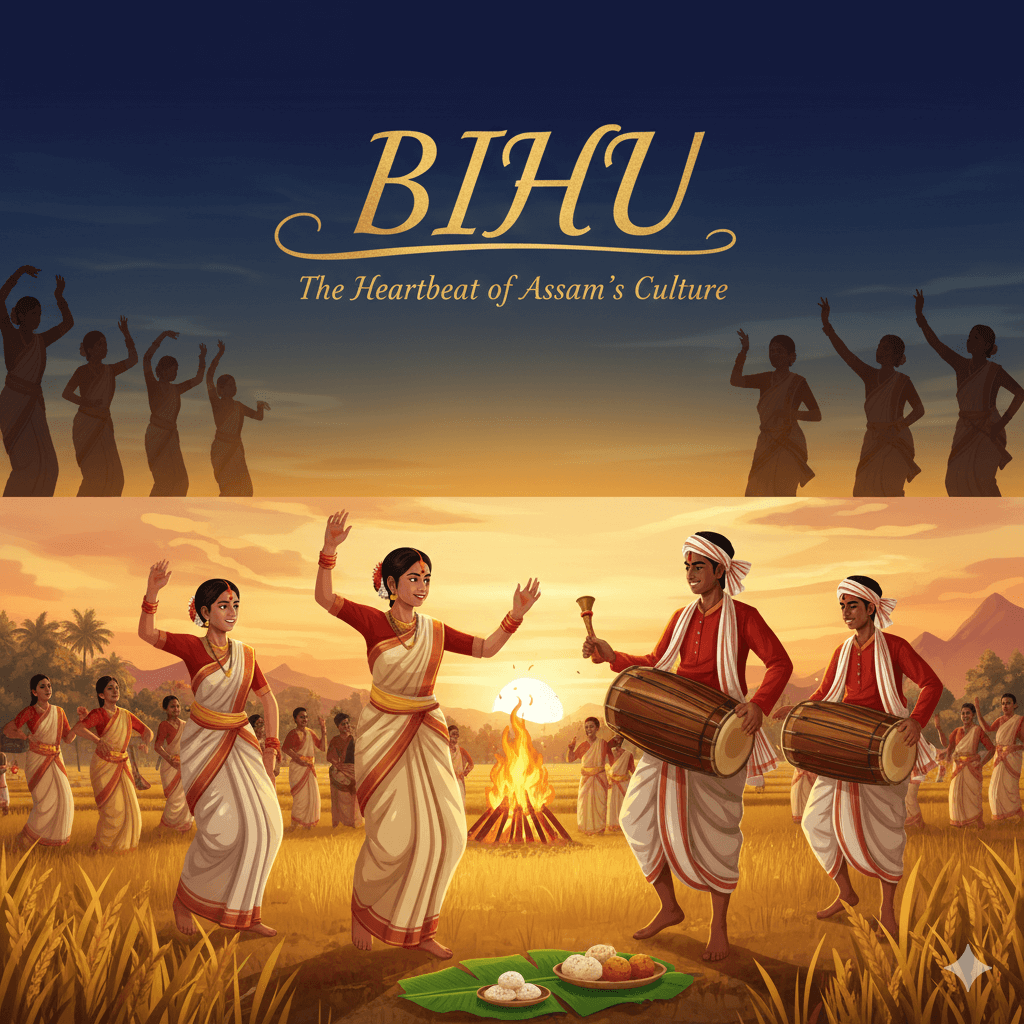
Bihu is a vibrant festival celebrated in Assam, marking the changing seasons and agricultural cycles. There are three Bihus:
– Rongali Bihu (April): Celebrating the Assamese New Year and spring harvest.
– Kongali Bihu (October): Marking the lean agricultural period.
– Bhogali Bihu (January): Celebrating the winter harvest.
The Significance of Bihu
Bihu holds immense cultural and agricultural significance:
– Harvest Celebration: Bihu marks the sowing and harvesting of crops, expressing gratitude to nature.
– Community Bonding: Strengthens community ties through music, dance, and feasts.
– Cultural Heritage: Showcases Assam’s rich traditions, folklore, and craftsmanship.
Traditions and Customs
Bihu is a vibrant festival filled with colorful traditions:
– Bihu Dance: Energetic folk dance performed by young men and women.
– Music and Instruments: Traditional instruments like dhol, pepa, and gogna accompany Bihu songs.
– Traditional Food: Pitha, larus, and apong (rice beer) are savored during Bihu.
– Community Gatherings: People come together for feasts, games, and celebrations.
Why Bihu is Special
Bihu signifies:
– Joy and Gratitude: Celebrating life, nature, and community.
– Cultural Identity: Showcasing Assam’s unique heritage and traditions.
– New Beginnings: Marking fresh starts and renewal.
