
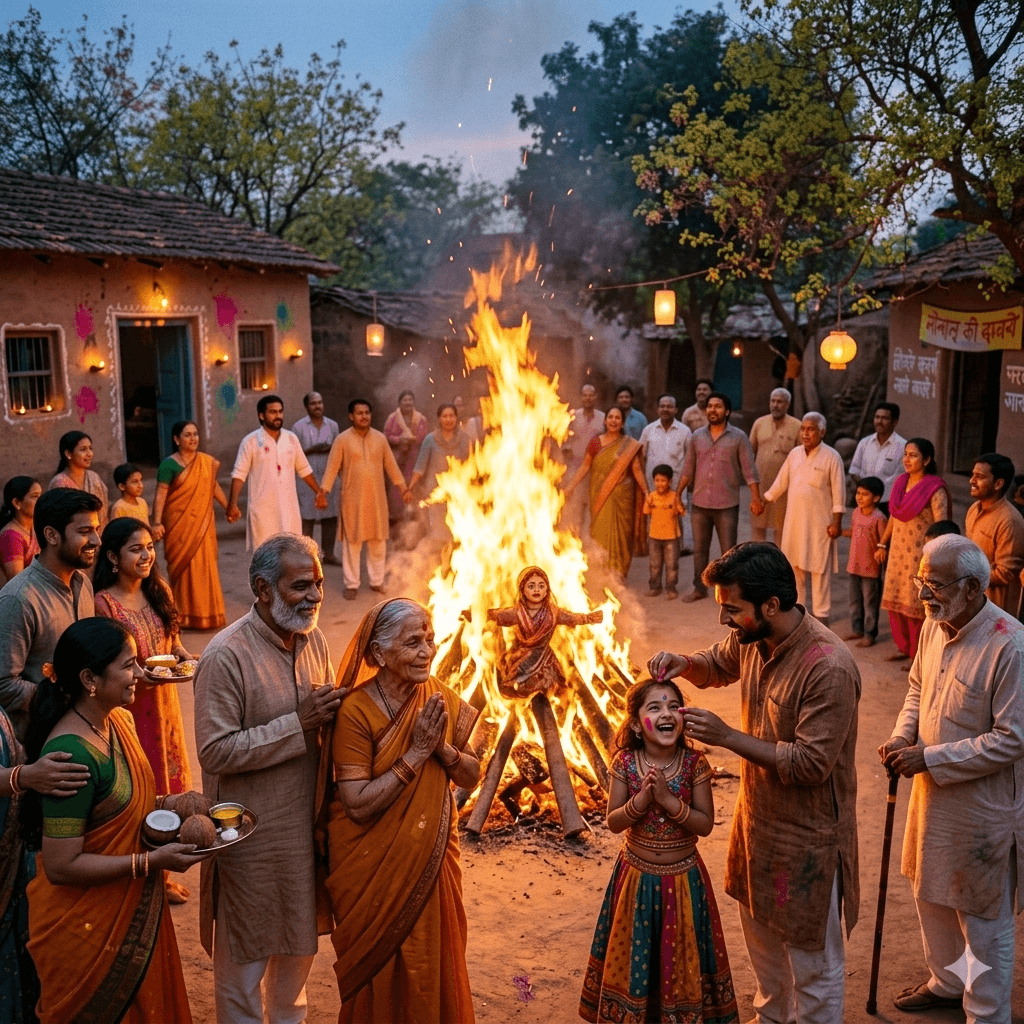
Holika Dahan, also known as Chhoti Holi, is a significant Hindu festival that marks the victory of good over evil. Celebrated on the eve of Holi, it commemorates the burning of Holika, the demoness sister of Hiranyakashipu, who tried to kill her nephew Prahlad, a devotee of Lord Vishnu.
The Legend of Holika Dahan
According to Hindu mythology, Hiranyakashipu, the demon king, was enraged by his son Prahlad’s devotion to Lord Vishnu. He ordered Holika, who had a boon rendering her immune to fire, to take Prahlad into a bonfire. However, Holika’s protection failed, and she was consumed by flames, while Prahlad remained unharmed due to his unwavering faith in Lord Vishnu.
Significance of Holika Dahan
Holika Dahan symbolizes the triumph of righteousness over evil and marks the beginning of spring. The bonfire represents the destruction of negativity and purification of the soul. It’s a time for communities to come together, strengthen bonds, and celebrate the victory of good.
Rituals and Traditions
– Bonfire Ceremony: People gather wood and combustible materials to build a bonfire, symbolizing Holika’s burning.
– Puja and Offerings: Devotees offer prayers, wheat, coconut, and grains to the fire, seeking blessings and prosperity.
– Parikrama: Circumambulation around the fire is performed, absorbing its energy and leaving behind negativity.
– Singing and Dancing: Communities sing, dance, and share stories around the bonfire, fostering togetherness.
Modern Relevance
Holika Dahan serves as a reminder to shed past grievances, embrace new beginnings, and prioritize spiritual growth. It’s a celebration of faith, resilience, and the power of goodness.
