
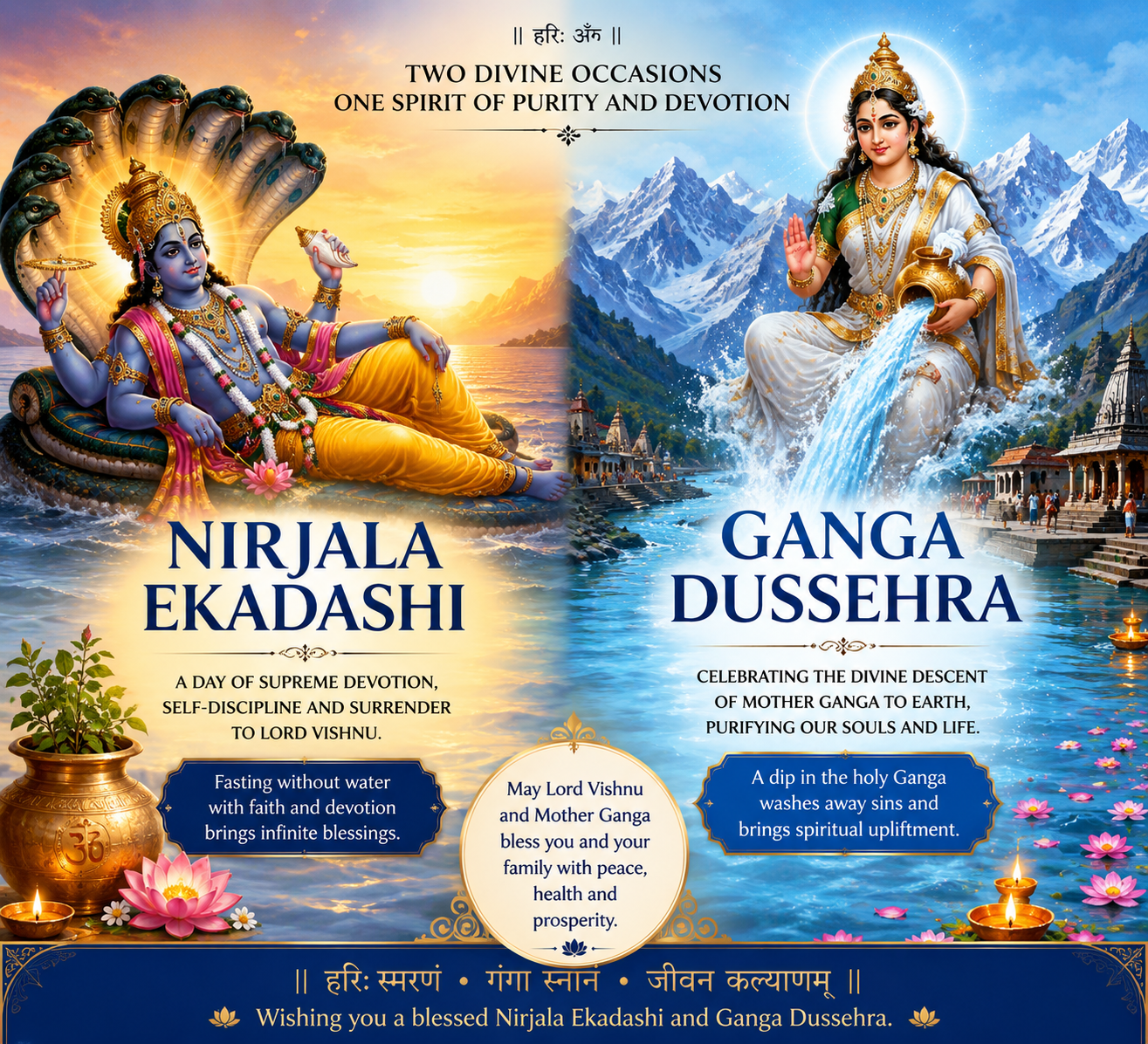
Nirjala Ekadashi and Ganga Dussehra are two significant Hindu festivals that hold immense spiritual importance. Let’s delve into the details of these sacred observances.
Nirjala Ekadashi: A Day of Strict Fasting
Nirjala Ekadashi, also known as Bhima Ekadashi, is a rigorous fast observed on the 11th lunar day (Ekadashi) of the bright fortnight (Shukla Paksha) in the Hindu month of Jyeshta (May-June). The term “Nirjala” means “without water,” indicating that devotees abstain from both food and water for 24 hours.
Significance and Benefits
Observing Nirjala Ekadashi is believed to grant spiritual merit equivalent to fasting on all other Ekadashis combined. It helps cleanse past sins, promotes spiritual growth, and guides devotees toward liberation (moksha). The fast is also said to bring blessings of health, wealth, and prosperity.
Rituals and Practices
- Wake up early, bathe, and worship Lord Vishnu
- Abstain from food and water for 24 hours
- Recite Vishnu Sahasranama, Bhagavad Gita, and other sacred texts
- Perform charity and donate to the needy
- Break the fast on Dwadashi (12th lunar day) after worshiping Lord Vishnu
Ganga Dussehra: Celebrating the Descent of Ganga
Ganga Dussehra, also known as Ganga Avataran, commemorates the descent of the sacred river Ganga to Earth. It is observed on the 10th day (Dashami) of the bright fortnight (Shukla Paksha) in the Hindu month of Jyeshta (May-June).
Significance and Benefits
- Purifies thoughts, actions, and speech
- Grants liberation from sins
- Brings blessings and salvation
- Offers spiritual growth and self-reflection
Rituals and Practices
- Take a holy dip in the Ganges River
- Offer prayers, flowers, and sweets to Ganga
- Recite Ganga stotra and perform Rudrabhishek puja
- Practice partial fasting or abstain from certain foods
Nirjala Ekadashi and Ganga Dussehra are sacred Hindu festivals that promote spiritual growth, self-reflection, and devotion. By observing these festivals, devotees can cleanse their sins, attain blessings, and move closer to liberation.
