
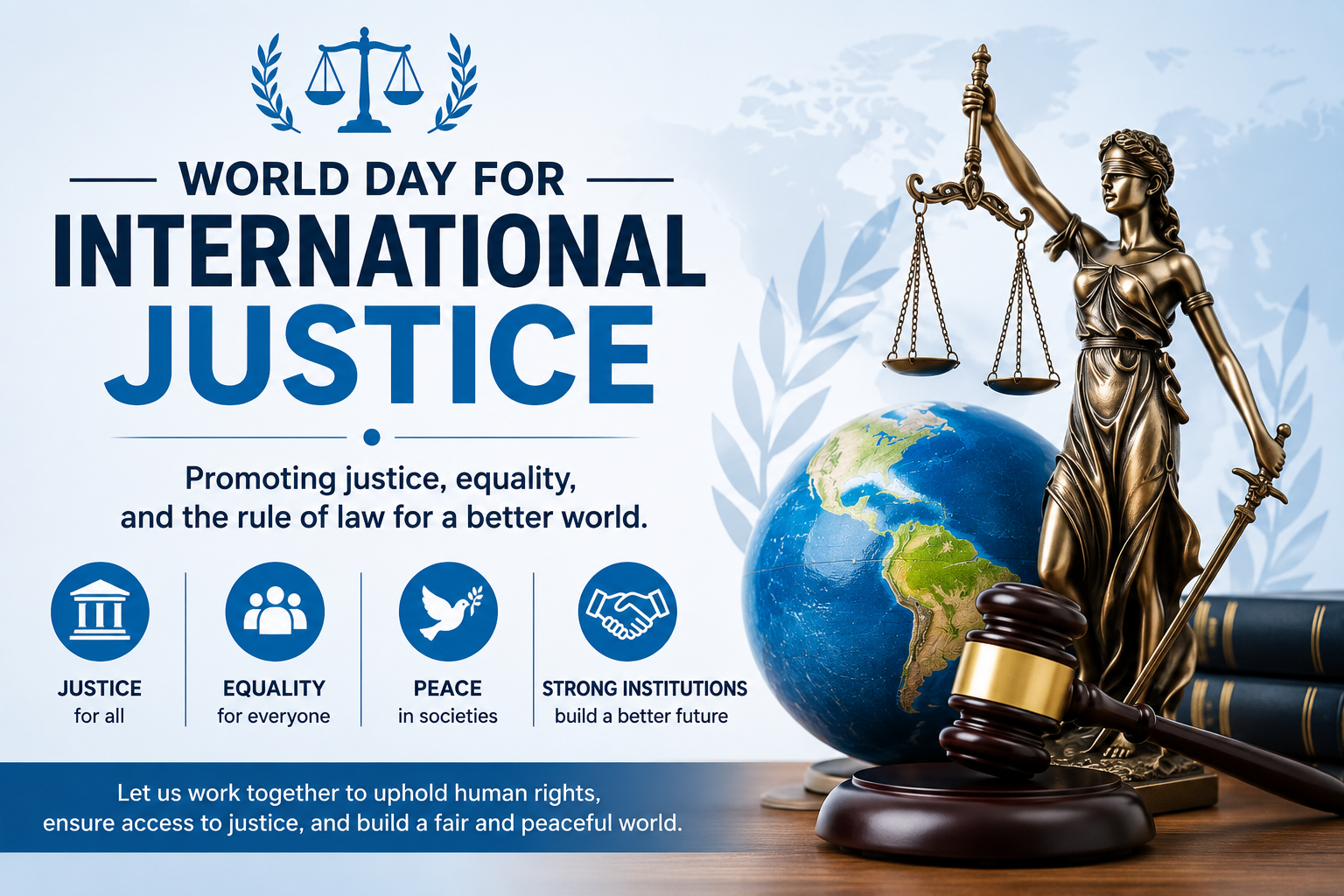
July 17th marks World Day for International Justice, a global observance commemorating the adoption of the Rome Statute in 1998. This landmark treaty established the International Criminal Court (ICC), a permanent institution dedicated to prosecuting genocide, war crimes, crimes against humanity, and aggression. As the world grapples with conflicts, atrocities, and human rights abuses, this day highlights the importance of justice, rule of law, and protecting human dignity.
The Evolution of International Justice
The concept of international justice has evolved significantly since the Nuremberg and Tokyo trials post-World War II. The ICC’s establishment marked a crucial milestone, providing a framework for holding individuals accountable for international crimes. Today, 123 countries are party to the Rome Statute, demonstrating global commitment to this cause.
The ICC’s Role and Challenges
The ICC investigates and prosecutes individuals responsible for international crimes, complementing national jurisdictions. However, challenges persist, including:
- Jurisdictional limitations: The ICC can only act when national systems are unable or unwilling to prosecute
- Enforcement issues: Reliance on state cooperation for arrests and evidence
- Political pressures: Threats to sovereignty and ICC’s independence
Key Areas of Focus
- Victim-centered approach: Ensuring justice for victims and affected communities
- Combating impunity: Holding perpetrators accountable, regardless of position
- Promoting rule of law: Strengthening national and international justice systems
Global Initiatives and Impact
- Ratification campaigns: Encouraging more countries to join the Rome Statute
- Capacity building: Supporting national justice systems
- Awareness and advocacy: Educating about international justice
As the world observes World Day for International Justice, it’s crucial to recognize progress made and challenges ahead. Collective efforts can strengthen the international justice system, ensuring accountability and justice for victims.
