
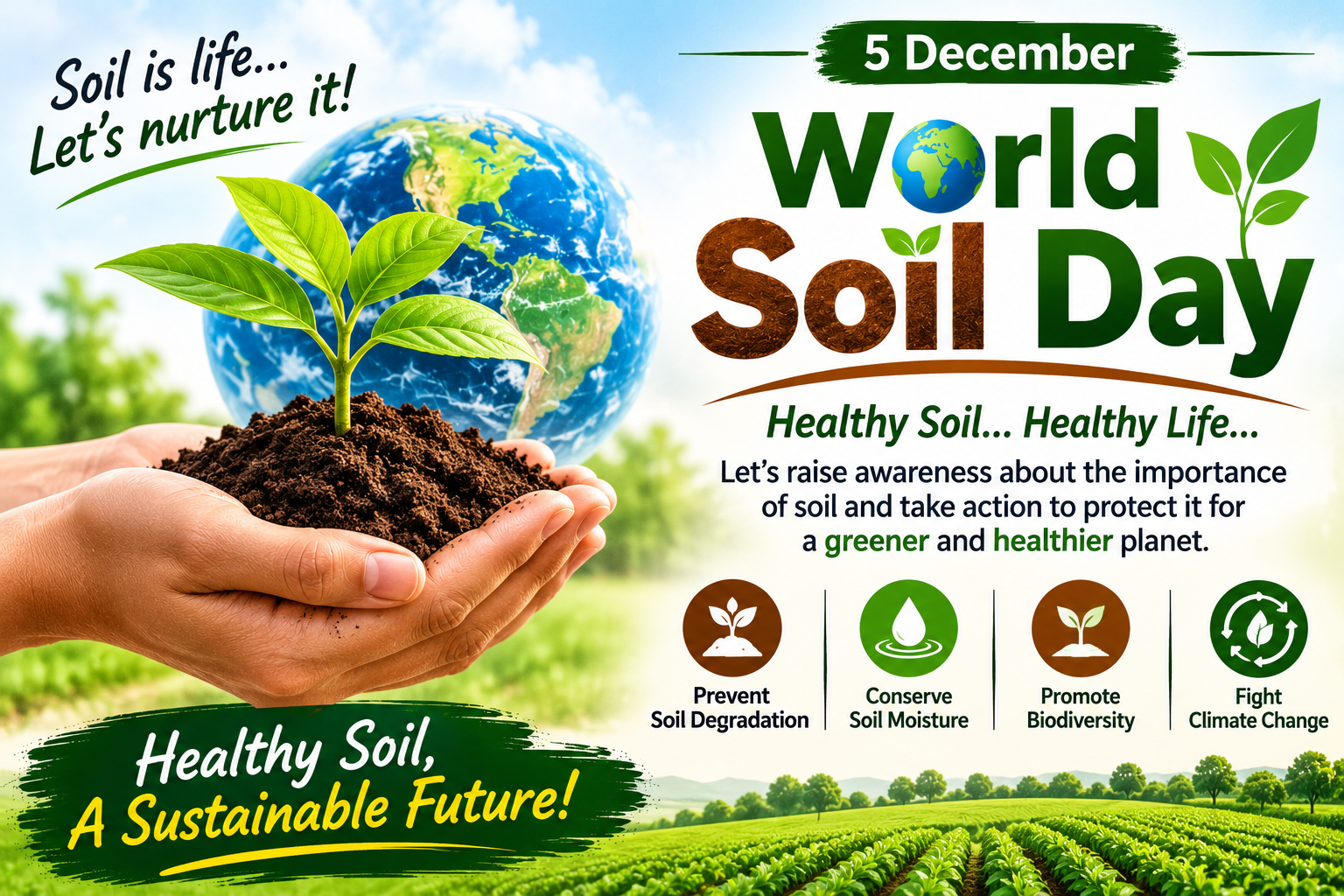
World Soil Day is celebrated every year on 5 December to raise awareness about the importance of healthy soil and encourage people to protect this valuable natural resource. Soil is one of the most essential components of life on Earth. It supports plant growth, provides nutrients for crops, stores water, maintains biodiversity and plays an important role in balancing our environment.
Healthy soil is the foundation of sustainable agriculture, food security and a healthier planet. However, increasing pollution, deforestation, excessive chemical use and unsustainable farming practices are damaging soil quality across the world.
Why Is Healthy Soil Important?
Soil is much more than just the ground beneath our feet. It is a living ecosystem that supports plants, animals, microorganisms and human life.
Some major benefits of healthy soil include:
- Supports Food Production: Healthy soil provides essential nutrients that help crops and plants grow properly.
- Maintains Biodiversity: Soil provides a natural habitat for earthworms, bacteria, fungi and other beneficial organisms.
- Stores Water: Good soil structure helps absorb and retain rainwater, supporting plants during dry periods.
- Controls Climate Change: Soil stores organic carbon and helps regulate the carbon cycle.
- Prevents Soil Erosion: Healthy soil structure reduces the loss of fertile topsoil caused by wind and water.
Major Causes of Soil Degradation
Soil degradation is becoming a serious environmental concern. Several human activities contribute to the loss of soil fertility and quality.
1. Excessive Use of Chemical Fertilizers and Pesticides
Overuse of chemical fertilizers and pesticides can disturb soil microorganisms and affect natural soil balance.
2. Deforestation
Removing trees and vegetation exposes soil to wind and rain, increasing erosion and reducing fertility.
3. Industrial Pollution
Improper disposal of industrial waste and harmful chemicals can contaminate soil and affect agricultural productivity.
4. Overgrazing
Excessive grazing reduces vegetation cover and exposes soil to erosion.
5. Unsustainable Farming Practices
Continuous cultivation, improper irrigation and poor land management can reduce soil nutrients and damage soil structure.
Simple Ways to Protect and Conserve Soil
Everyone can contribute to soil conservation by adopting environmentally friendly habits.
- Plant more trees and protect green spaces.
- Use organic manure and compost wherever suitable.
- Reduce excessive use of chemical fertilizers and pesticides.
- Avoid burning agricultural waste.
- Follow crop rotation and sustainable farming practices.
- Prevent the dumping of plastic and harmful waste on land.
- Use water responsibly and adopt proper irrigation methods.
- Encourage farmers to follow soil testing and nutrient management practices.
Role of Farmers in Maintaining Soil Health
Farmers play an important role in protecting soil because agricultural productivity directly depends on soil quality.
Practices such as crop rotation, cover cropping, composting, minimum tillage and balanced fertilizer application can improve soil fertility and maintain its natural structure.
Regular soil testing also helps farmers understand nutrient deficiencies and apply fertilizers according to crop requirements rather than using them excessively.
Connection Between Soil Health, Food Safety and Human Health
Healthy soil is closely connected to the quality of the food we consume. Soil provides essential nutrients to crops and supports the growth of safe and nutritious food.
Contaminated soil may introduce harmful chemicals and heavy metals into agricultural produce. Therefore, proper soil management, responsible waste disposal and safe agricultural practices are important for protecting the food chain and public health.
Maintaining soil health is not only an agricultural responsibility but also an important step towards building a safer and healthier society.
How Can We Contribute to a Sustainable Future?
Protecting soil requires collective efforts from individuals, farmers, industries, communities and governments.
We can make a difference through small actions such as planting trees, reducing waste, composting kitchen waste, avoiding unnecessary chemicals and spreading awareness about soil conservation.
Educational programmes and environmental awareness campaigns can also encourage communities to understand why soil protection matters.
Conclusion
World Soil Day reminds us that healthy soil is essential for healthy lives, sustainable agriculture and environmental protection. Soil takes a long time to develop, but it can be damaged quickly through irresponsible human activities.
By adopting sustainable practices and spreading awareness, we can protect this valuable natural resource for future generations.
Remember: Save Soil, Save Life! Healthy Soil Today Means a Healthier Planet Tomorrow.
Let’s work together to protect our soil and create a greener, cleaner and more sustainable future.
