
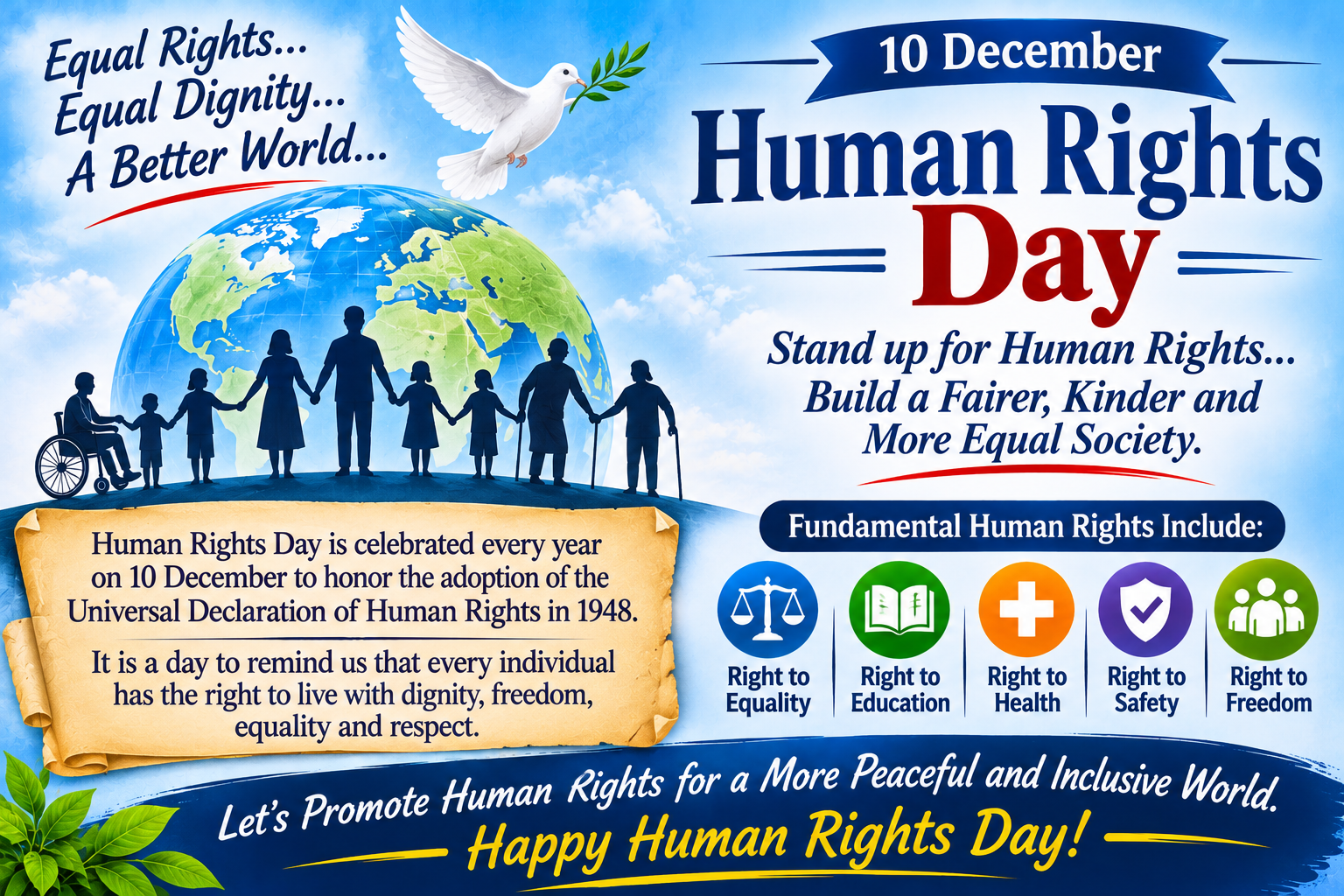
Human Rights Day is celebrated every year on 10 December to promote awareness about the fundamental rights and freedoms that belong to every human being, regardless of nationality, gender, religion, language, race or social background.
This day commemorates the adoption of the Universal Declaration of Human Rights (UDHR) by the United Nations General Assembly on 10 December 1948. The declaration established a common standard of human rights and dignity for people across the world.
Human Rights Day reminds us that every individual deserves equal treatment, freedom, safety, respect and opportunities to live a dignified life.
Why Is Human Rights Day Celebrated?
Human Rights Day is observed to raise awareness about the importance of protecting basic human rights and ensuring justice and equality for everyone.
The Universal Declaration of Human Rights was adopted in 1948 after the Second World War to establish common principles for protecting human dignity and freedom.
The day encourages governments, organisations, communities and individuals to work together to prevent discrimination, injustice, exploitation and inequality.
It also reminds us that human rights are universal and should be protected in every society.
What Are Human Rights?
Human rights are basic rights and freedoms that every person is entitled to simply because they are human.
These rights protect individuals from discrimination and help ensure that everyone can live with dignity, freedom and security.
Some important human rights include:
- Right to Life: Every person has the right to life, liberty and personal security.
- Right to Equality: Everyone deserves equal protection and treatment under the law.
- Right to Education: Every individual should have access to education and learning opportunities.
- Right to Health: People should have access to healthcare and conditions that support their well-being.
- Right to Freedom of Expression: Individuals should be able to express their opinions responsibly.
- Right to Work: Everyone should have the opportunity to work under fair and safe conditions.
- Right to Privacy: Every person deserves protection of their personal life and information.
Importance of Human Rights in Society
Human rights play an essential role in creating peaceful, fair and inclusive communities.
1. Promotes Equality
Human rights ensure that individuals are treated fairly without discrimination based on their background or identity.
2. Protects Human Dignity
Every person deserves respect and the freedom to live without humiliation, exploitation or abuse.
3. Encourages Social Justice
Human rights support fair opportunities and help protect vulnerable and disadvantaged communities.
4. Supports Education and Development
Access to education allows individuals to gain knowledge, develop skills and improve their quality of life.
5. Strengthens Democracy
Freedom of expression, participation and access to justice help people contribute to society and public life.
6. Protects Children and Vulnerable Groups
Human rights help protect children, women, persons with disabilities, older people and other vulnerable communities from exploitation and discrimination.
Major Human Rights Challenges Around the World
Despite progress in human rights protection, many people continue to face serious challenges.
Some common human rights concerns include:
- Child labour and exploitation.
- Human trafficking and forced labour.
- Gender discrimination and violence.
- Poverty and unequal access to basic services.
- Lack of access to quality education.
- Discrimination based on social or economic background.
- Restrictions on freedom of expression.
- Unsafe working and living conditions.
Addressing these challenges requires awareness, effective laws, responsible institutions and active participation from communities.
How Can We Protect Human Rights?
Protecting human rights is a shared responsibility. Every individual can contribute by respecting others and promoting fairness in everyday life.
Here are some simple ways to support human rights:
- Treat everyone with dignity and respect.
- Speak against discrimination, bullying and injustice.
- Support equal educational opportunities for children.
- Promote gender equality and women’s empowerment.
- Help vulnerable and underprivileged communities.
- Respect the rights and opinions of others.
- Spread awareness about fundamental rights.
- Support organisations working for human welfare and social justice.
Small actions can create meaningful changes when individuals work together.
Role of Education in Promoting Human Rights
Education plays an important role in creating awareness about human rights and responsibilities.
When people understand their rights, they become more confident in protecting themselves and standing against unfair treatment.
Schools, colleges and educational institutions can organise awareness programmes, discussions, workshops and community activities to teach students about equality, freedom, respect and justice.
Educating children about human rights from an early age also encourages kindness, tolerance and responsible citizenship.
Role of NGOs in Protecting Human Rights
Non-governmental organisations (NGOs) and social welfare organisations contribute significantly to promoting human rights at the community level.
They support initiatives related to child welfare, education, healthcare, women’s empowerment, nutrition, disability inclusion and assistance for underprivileged families.
NGOs also organise awareness campaigns, community programmes and educational activities to help people understand their rights and access available support.
Their efforts help create more inclusive communities where individuals receive dignity, respect and equal opportunities.
How Is Human Rights Day Celebrated?
Human Rights Day is observed across the world through various educational and awareness activities.
Common activities include:
- Organising human rights awareness campaigns.
- Conducting seminars and workshops in schools and colleges.
- Promoting equality and anti-discrimination initiatives.
- Supporting child protection and women’s empowerment programmes.
- Organising community welfare activities.
- Sharing human rights messages through social media.
- Encouraging discussions about justice, freedom and dignity.
These activities inspire individuals and communities to take responsibility for protecting human rights.
Conclusion
Human Rights Day reminds us that every human being deserves equality, freedom, dignity and respect. Human rights are not privileges reserved for a few people; they belong to everyone.
Building a fair and peaceful society requires collective efforts from governments, organisations, educational institutions and individuals.
Let us respect each other’s rights, stand against discrimination and support those who need help.
Every Human Being Matters. Every Right Matters. Every Voice Deserves Respect.
This 10 December, let us work together to create a world where everyone can live with dignity, freedom, equality and justice.
Happy Human Rights Day!
