
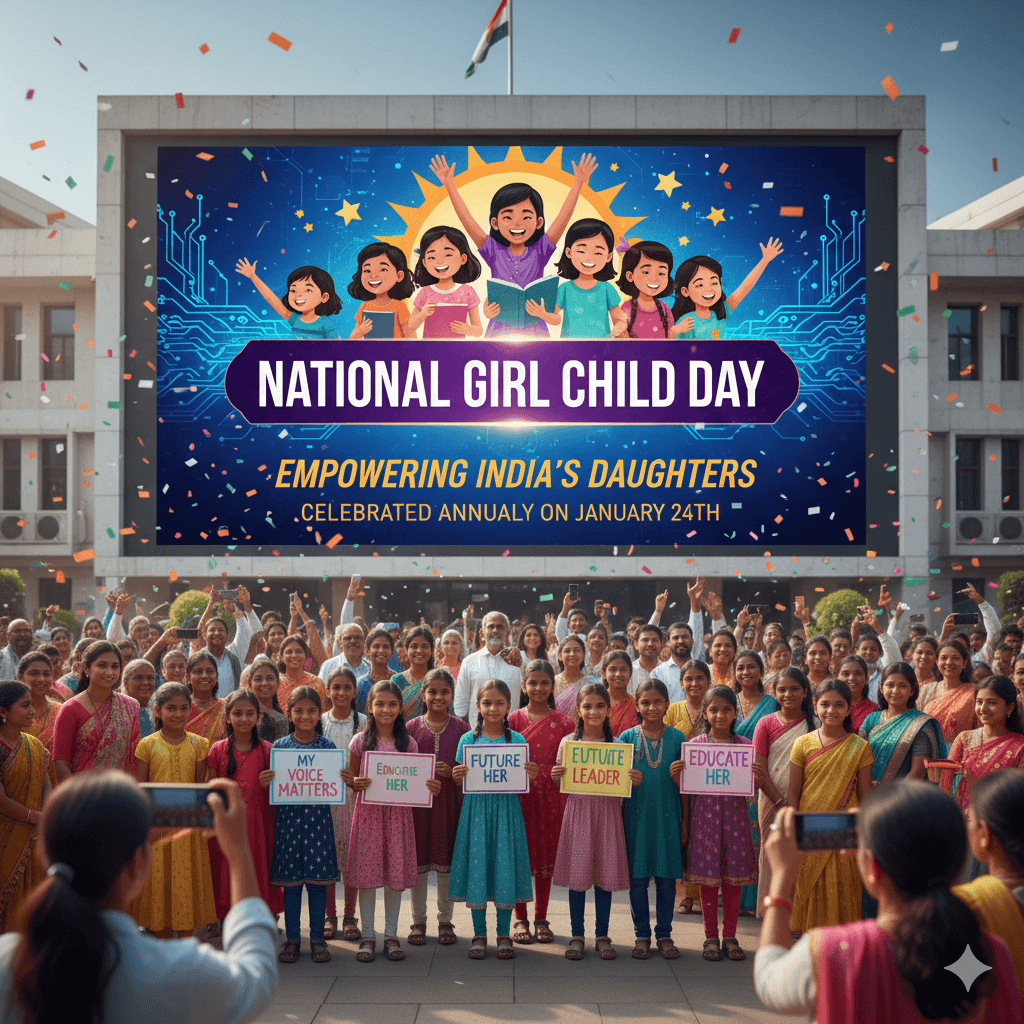
January 24 marks National Girl Child Day, a celebration dedicated to promoting the rights, education, health, and overall welfare of girls in India. Initiated in 2008 by the Ministry of Women and Child Development, this day aims to address gender inequality and empower girls to become equal stakeholders in the country’s development.
History and Significance
National Girl Child Day was launched to spread awareness about the challenges faced by girls, including declining child sex ratio, female foeticide, child marriage, and unequal access to education and healthcare. The day serves as a reminder of the importance of providing girls with safety, education, nutrition, and respect, enabling them to realize their full potential.
Government Initiatives and Achievements
The government has implemented several schemes to support girls, including:
– Beti Bachao Beti Padhao: A flagship program aimed at preventing gender-biased sex selection and promoting girls’ education.
– Mission Shakti: An umbrella scheme focusing on women’s safety, security, and empowerment.
– Kasturba Gandhi Balika Vidyalayas: Residential schools providing education to girls from marginalized communities.
– Sukanya Samriddhi Yojana: A savings scheme encouraging parents to save for their daughters’ future.
These initiatives have led to improvements in key indicators, such as:
– Sex Ratio at Birth (SRB): Increased from 918 in 2014-15 to 930 in 2023-24.
– Gross Enrolment Ratio (GER): Rose from 75.51% in 2014-15 to 78% in 2023-24.
– Female Enrolment in Higher Education: Increased by 38% between 2014-15 and 2022-23.
Objectives and Themes
The core objectives of National Girl Child Day include:
– Raising awareness about girls’ rights and promoting gender equality.
– Addressing issues like child marriage, female foeticide, and malnutrition.
– Empowering girls through education and skill development.
