
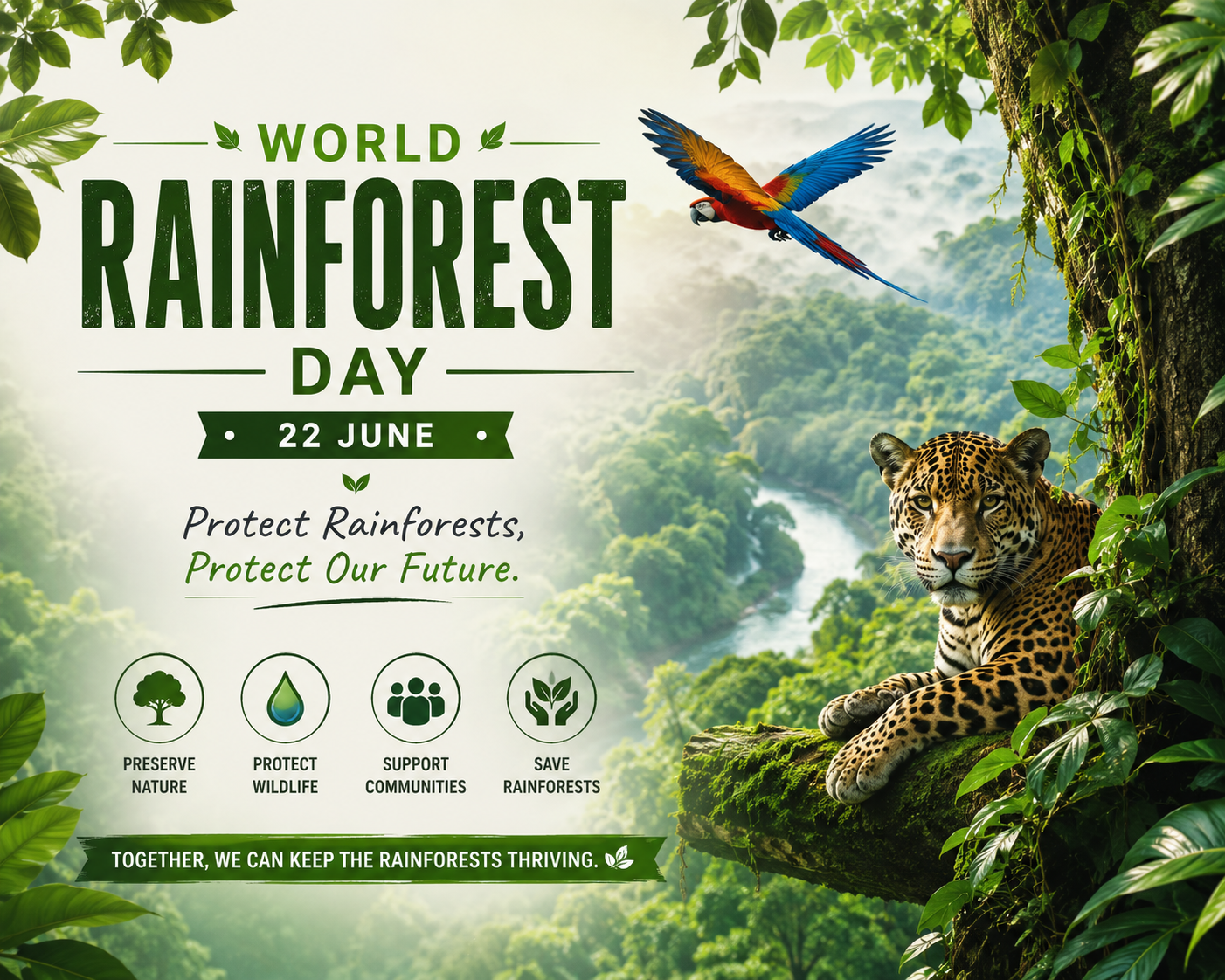
June 22nd marks World Rainforest Day, a global initiative to raise awareness about rainforest’s importance and promote conservation efforts. Rainforests cover 6% of the Earth’s land surface, hosting 50% of terrestrial species and supporting millions of people.
Why Rainforests Matter
- Biodiversity Hotspots: Home to millions of species, many endemic
- Climate Regulation: Absorb carbon dioxide, produce oxygen
- Water Cycles: Regulate rainfall patterns, prevent floods
- Indigenous Communities: Support livelihoods, cultural heritage
Threats to Rainforests
- Deforestation: Agricultural expansion, logging, mining
- Climate Change: Altered ecosystems, increased wildfires
- Poaching: Threatens species survival
Conservation Efforts
- Protected Areas: National parks, wildlife reserves
- Sustainable Practices: Eco-friendly logging, agriculture
- Reforestation: Restoring degraded forests
- Community Engagement: Empowering local communities
What You Can Do
- Support Conservation: Donate, volunteer
- Spread Awareness: Share information, social media
- Make Eco-Friendly Choices: Sustainable products, reduce waste
- Get Involved: Join local conservation groups
Rainforest Success Stories
- Amazon Conservation: Efforts to protect Amazon rainforest
- Reafforestation Projects: Initiatives restoring degraded forests
- Community-Led Conservation: Local communities protecting forests
Rainforests are crucial for the planet’s health. Collective action can protect these ecosystems, preserving biodiversity, regulating climate, and supporting communities.
Some key statistics:
- 13 million hectares of forest lost annually
- 80% of Earth’s terrestrial species in rainforests
- 6 billion people depend on forests
