
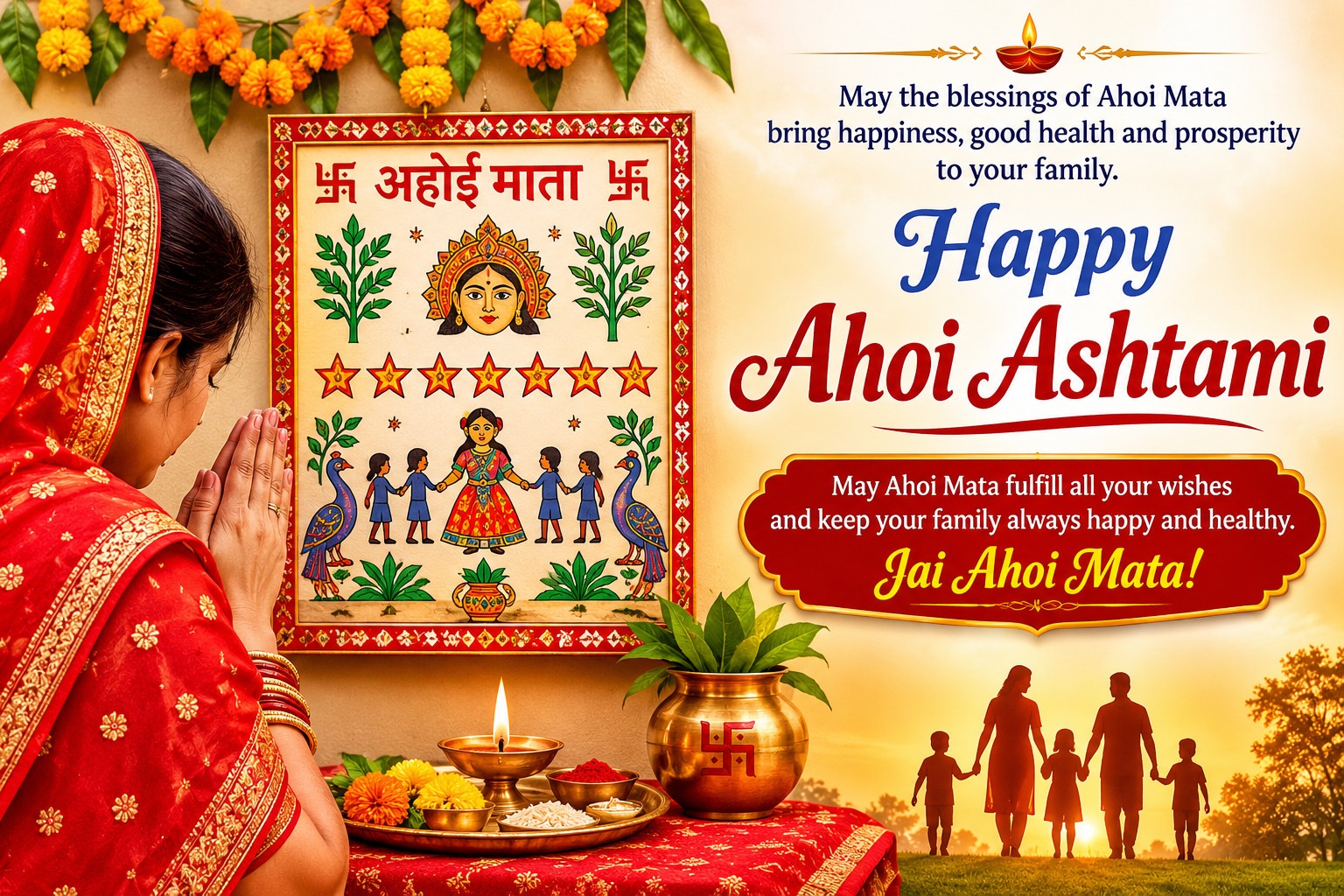
It’s a very special fast kept by mothers in North India for the long life, health and happiness of their children.
This year it was on *Sunday, 1 November 2026* – about 8 days before Diwali and 4 days after Karwa Chauth.
Who is Ahoi Mata?
Ahoi Mata is considered a form of Goddess Parvati / Durga, worshipped as the protector of children. Mothers pray to her to keep their children safe from illness, accidents, evil eye and misfortune.
Earlier this fast was kept only for sons, but now mothers keep it for *all children – sons and daughters both.
The Katha / Story behind It
Long ago, a woman with 7 sons went to dig soil to repair her house before Diwali. While digging, her spade accidentally killed a baby porcupine – Syahu.
The grieving mother porcupine cursed her, and slowly she lost all her 7 sons one by one.
Heartbroken, she was advised by elders to worship Ahoi Mata. She drew Ahoi Mata’s picture on the wall, kept a strict fast, prayed with full repentance and asked for forgiveness.
Pleased with her devotion, Ahoi Mata forgave her and blessed her with her children back. fb66
Moral: Compassion for all living beings, repentance for mistakes, and a mother’s devotion.
How is the Vrat Kept?
- Morning – Sankalp
Wake up before sunrise, take bath, and take sankalp to keep fast for children’s well-being. Traditionally it’s a Nirjala fast – no food, no water till evening.
- Evening Puja
– Draw Ahoi Mata’s picture on a clean wall with 8 corners – Ashtha Koshthak. Beside her draw Syahu (porcupine) and her 7 babies.
– Keep a Kalash filled with water on the left side.
– Offer roli, rice, flowers, fruits, halwa-puri, jowar, and coins.
– Elder lady of the family reads the Ahoi Ashtami Katha. Women hold 7 grains of wheat in hand while listening.
- Breaking the Fast
Unlike Karwa Chauth, this fast is broken *after sighting the stars*, not the moon – because moon rises very late that night. Offer water (Arghya) to the stars, then break fast with prasad.
Why is it special?
– It’s a symbol of a mother’s unconditional love and sacrifice
– It teaches children about forgiveness and protecting innocent life
– Families come together in the evening for Katha and puja
