
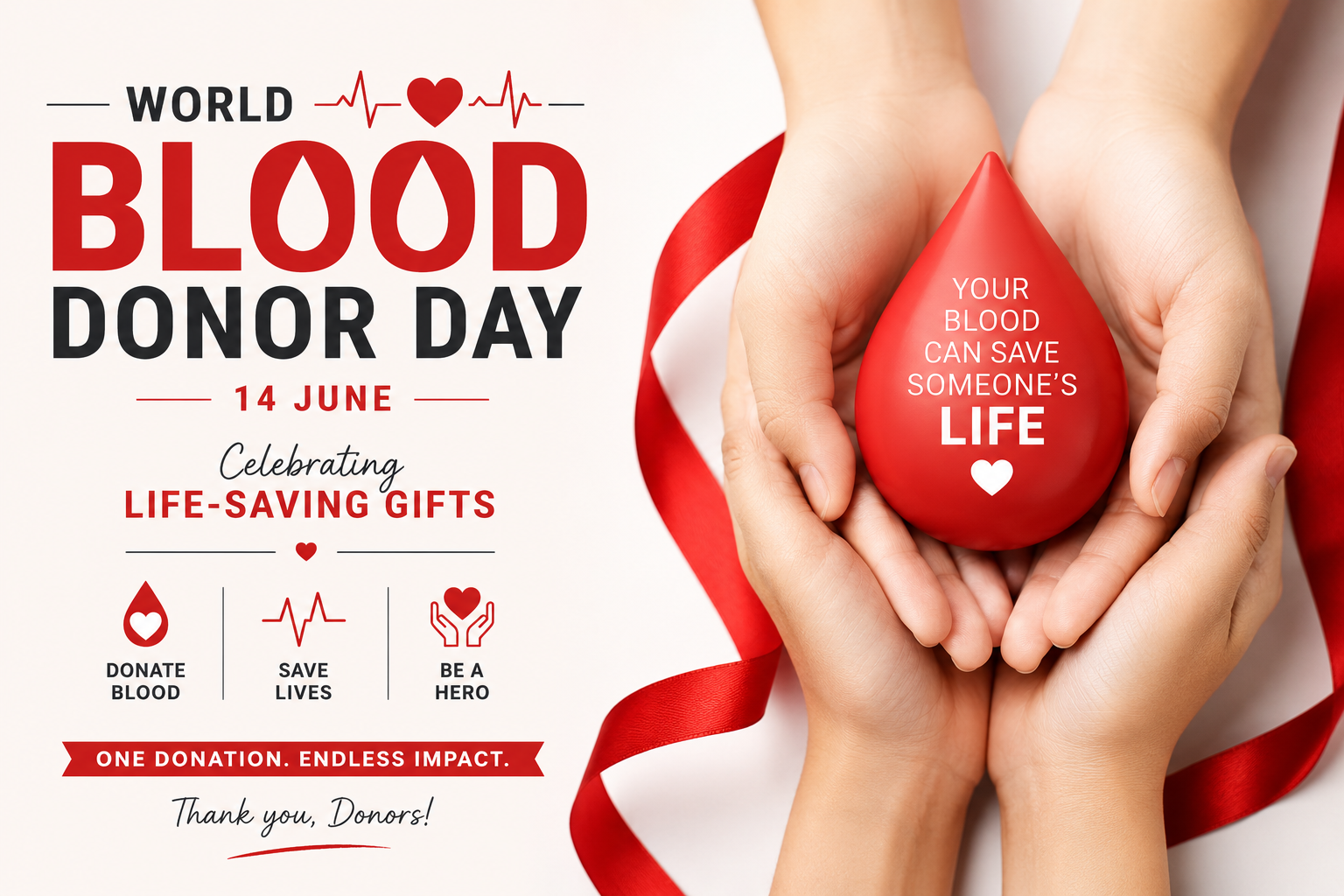
June 14th marks World Blood Donor Day, a global initiative led by the World Health Organization (WHO) to raise awareness about the importance of blood donation and promote voluntary donation. Blood is a vital resource, essential for saving lives in emergencies, surgeries, and medical treatments.
The need for blood is constant, with hospitals and healthcare systems relying on donations to meet patient demands. Yet, many countries face shortages, highlighting the importance of regular, voluntary donations. Blood donors are unsung heroes, giving the gift of life to those in need.
Blood donation is safe, simple, and painless, taking only about an hour. Donors can give whole blood, plasma, or platelets, helping patients with various medical conditions. The impact of blood donation is immense, supporting treatments for cancer, anaemia, trauma care, and more.
Global initiatives and strategies aim to ensure safe blood supplies and promote donation. WHO’s Global Blood Safety Program and national blood transfusion services work to establish robust systems, screen donations, and support donors. Many countries rely on voluntary, unpaid donors, setting an example for others.
The theme for World Blood Donor Day emphasizes the value of voluntary donation and the need for regular donors. Events and activities include blood drives, awareness campaigns, and donor appreciation ceremonies. Communities come together to promote donation, dispel myths, and encourage participation.
In conclusion, World Blood Donor Day highlights the critical role of blood donors in saving lives. By donating blood, individuals can make a significant difference, providing hope and healing to patients in need.
Some key statistics:
- 5 million units of blood collected globally
- 40% of blood donations in low- and middle-income countries
- 1 in 3 people will need blood in their lifetime
Blood donation is a lifesaving act. By donating regularly, individuals can help ensure a safe, reliable blood supply.
